Amanda Weller, Heather Smith, Briann Smith, and Lisa Smith
Sir Ken Robinson is an English author, speaker, and international advisor revolving education in the arts to government, education, and arts bodies. Mr. Robinson was a professor of Arts Education at the University of Warwick, he was congratulated on his services of education in 2003, and he was director of The Arts in Schools Project from 1985–1989. Robinson’s specializes in education, creativity, and innovation and frequently speaks at conferences about these topics.
In the video, Changing Education Paradigms Ken Robinson says that, “Every country on earth, at the moment, is reforming public education.” The first of many reasons is economics. People are attempting to work out the struggling question because we cant determine what the economy will look like in a few days. They're wondering how to educate their children to take place in the economics of the 21st century.
The second reason has to deal with cultural identity. Ken Robinson challenges the way children are being educated in his video. He talks about the way that we're educating our children. The system of education currently going on was designed for a different age. Mr. Robinson talks about how children are brought into ADHD because they're getting distracted by "boring stuff." He talks about how children are being medicated when teachers should be waking them up. Ken doesn't believe that students should be medicated. He believes that we should be changing education and doing away with standardized testing. Ken mentioned that standardized testing was designed for a different age. Children think differently than they did years ago. So many things have changed, but not education. The school system should constantly create creativity and acknowledge all kinds of learning.
Mr. Robinson talks about the irony of “No Child Left Behind”. He said that this initiative actually leaves millions of children behind, how ironic is this? In some parts of the country, 60 percent of kids drop out of high school, and this is just the tip of the iceberg. What it doesn't count are all the kids who are in school but being disengaged from it, who don't enjoy it, who don't get any real benefit from it. And the reason is not that we're not spending enough money. America spends more money on education than most other countries, class sizes are smaller than in many countries, and there are hundreds of initiatives every year to try and improve education. The trouble is, it's all going in the wrong direction.
1. Human beings are naturally different and diverse:
Education under No Child Left Behind (NCLB) is not based on diversity, it’s based on conformity. One of the effects of NCLB has been to narrow the focus onto the so-called STEM disciplines- such as Math and Science. Mr. Robinson was not saying that they are not important, just that “they are necessary but they’re not sufficient”. He believes a real education has to give equal access to the arts, humanities, and physical education. Mr. Robinson taught me that children prosper best with a broad curriculum that celebrates their various talents, not just a small range of talents. Take the arts, for instance, this is not just important because it improves children’s math scores, but it is important because it speaks to parts of children’s being that are otherwise untouched.
2. Curiosity:
If you can light a spark of curiosity in a child, they will learn without any further assistance. Children are natural learners, and curiosity is the engine of achievement. Mr. Robinson said that one of the effects of the current American culture has been to de-professionalize teachers. He said there is no system in the world or any school in the country that is better than its teachers. Can I get an AMEN? (Sorry- I HAD to add that!) Teachers are the lifeblood of the SUCCESS of schools. But teaching is a creative profession. It’s not a delivery system- you’re not there just to pass on received information. Great teachers not only deliver information, but they also mentor, stimulate, provoke, and engage students. At the end of the day, education is about LEARNING! If there’s no learning, there’s no education! And what, might you ask, is the role of a teacher? To FACILITATELEARNING!!! Mr. Robinson also taught me that part of the problem is the dominant culture of education has come to focus on not teaching and learning, but testing. Testing is important, as he stated, but there is a place and time for everything. Standardized tests should not be the dominant culture of education. They should help, they should be diagnostic, and they should SUPPORT learning- they should NOT OBSTRUCT IT!!!
3. Human life is inherently creative:
We create our lives through this restless process of imagining alternatives and possibilities, and what one of the roles of education is to awaken and develop these powers of creativity. Mr. Robinson has taught me that instead of developing creativity, instead we have a culture of standardization. It doesn’t have to be this way, though. He used the example of Finland and how well the students do in math, science, and reading. He said the reason that Finland’s system works is simple: they do NOT obsess about “those” disciplines (math, science, reading)- they have a broad approach to education.
Mr. Robinson also taught me that all high-performing systems in the world currently do what is apparently inevident to the systems in America- they:
1. Individualize teaching and learning. They recognize that it’s students who are learning and the system has to engage them, their curiosity, their individuality, and their creativity.
2. Attribute a very high status to the teaching profession. They recognize that you can’t improve education if you don’t pick great people to teach and if you don’t keep giving them constant support and professional development. Investing in professional development is not a COST, it’s an INVESTMENT!
3. Devolve responsibility to the school level for getting the job done. Mr. Robinson said there is a big difference between going into a mode of command and control in education- this was probably the most influential part to me because if you think about it: it is teachers and students in a classroom, not a committee of legislature, it should be the teachers discretion to make the environment enriching and plausible!
The point Mr. Robinson was trying to make is very clear: education is not a mechanical system. It’s a human system. IT’S ABOUT PEOPLE!!! People who do or do not want to learn. Is school boring? Is it irrelevant? Is it at odds with someone’s life outside of school? These are the reasons for drop-outs. These are the trends of America. There are conditions under which people thrive, and conditions under which they don’t. It’s that PLAIN and SIMPLE! He said that we are all organic creatures and the culture of the school is absolutely essential. Right beneath the surface are these seeds of possibility, waiting for the right conditions to come about, and with organic systems, if the conditions are right, life is inevitable. It happens all the time. You take an area, a school, a district, and change the conditions, give people a different sense of possibility, a different set of expectations, a broader range of opportunities, you cherish and value the relationships between teachers and learners, you offer people the discretion to be creative and to innovate what they do- and schools that were once bereft spring to LIFE.
According to Robinson, Great leaders know this! The real role of leadership in education- on the national, state, and school levels- is not and should not COMMAND and CONTROL. The real role of leadership in education is CLIMATE CONTROL, creating a climate of POSSIBILITY! And if you do that, people will rise to it and achieve things that you completely did not anticipate and couldn’t have expected.
Mr. Robinson ended with a magnificent quote from Benjamin Franklin:
“There are three sorts of people in this world: those who are immovable, those who are moveable, and those who move.”
What does this mean? There are those who just don’t get it or don’t want to, those who see the need for change and are prepared to listen, and those who make things happen. If you encourage more people- that would be a MOVEMENT. If the movement is strong enough- that’s, in the best sense of the word, a REVOLUTION. And that’s what we NEED!
By: Briann Smith, Amanda Weller, Heather Smith, and Lisa Smith
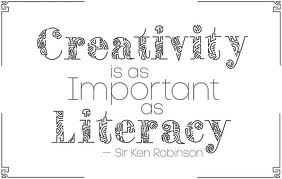
In Ken Robinson's TED Talk, he gives an entertaining and inspirational speech on creating an education system that nurtures creativity instead of undermining the power of it. He begins his speech by describing the three themes that were running through the conference which are the extraordinary evidence of human creativity and the variety and range of it and how it has put us in a place where we do not know what’s going to happen in the future. The third theme was that children have extraordinary capacities especially for innovation. He says that he has interest in education and that he believes that everyone else does as well. Robinson says, this is partly because education is meant to take us into the unforeseen future. He says that all children have talent and that adults squander them. Robinson believes that now creativity is just as important as literacy is and that it should be treated with the same status. Through several funny stories involving children, he explains that children naturally take chances on things. They are not fearful of being wrong and they just go for it. He then explains that as adults most children lose this fearlessness and they become frightened of being wrong. Robinson then told the story of the conversation he had with Gillian Lynne, the choreographer of “Cats”. When she was a student in the 1930s, her teacher believed that she had a learning disorder because she kept fidgeting in class. Her mother to her to a specialist and instead of putting her on medication. The doctor saw that she was destined to be a dancer and defining moment put her on the path of dance. Robinson believes that the only hope for the future is to adopt a new conception of human ecology,one in which we start to reconstitute our conception of the richness of human capacity. He says that our education system has mined our minds our minds in the way that we strip-mine the earth for a commodity. Robinson explains that this will not serve us and we have to rethink the fundamental principles on which we are educating our children. He ends his speech by saying that we have to appreciate our creative capabilities for the richness they are and see our children for the hope they are. Robinson says that our task is to educate their whole being so that they will be prepared for the future. As future educators, it will be our job to teach children and prepare them for the world. As we learned from Ken Robinson, it is important that we cultivate our students imagination and creativity in the classroom and encourage them to go for their dreams and goals no matter what. The children are our future and it is our job to prepare them and make sure that they are ready for it academically as well as creatively!
Sir Ken Robinson ends this video with a poem by W.B. Yeats and it was so touching that we felt compelled to share it first in this blog post. Robinson referred to “Children spread their dreams under our feet and we should tread softly.” Our group found this quote to be one that we remember when we start our own classrooms. Please see the following poem titled He Wishes For Cloths Of Heaven.
Poem by W B Yeats
He Wishes For The Cloths Of Heaven
HAD I the heavens' embroidered cloths,
Enwrought with golden and silver light,
The blue and the dim and the dark cloths
Of night and light and the half-light,
I would spread the cloths under your feet:
But I, being poor, have only my dreams;
I have spread my dreams under your feet;
Tread softly because you tread on my dreams.
William Butler Yeats
Sir Ken Robinson begins his speech talking about how human resources are depleting stating that we make very poor use of our talents. He references two types of people, the ones who divide the world into two groups and those who do not. He adds that many people endure their jobs/profession rather than enjoying it.
Education dislocates many people from their own personal talents. We must personalize education to fit our individual students so that personal dreams can still be accomplished. Our classrooms will be full of a diversity of talent and it is up to us as teachers to put each and every talent our students bring to the table to good use. They must flourish in order to succeed.
Robinson talks about how the education system is geared more towards conformity, like a fast food or manufacturing company. We must ask the question, does this feed the spirit, and if the answer is no, we should look for a better option. We must move from the manufacturing industrial way to the agricultural way. The agricultural way has human flourishing and ways of creating conditions under which the students will flourish.
In Mrs. Cassidy's video the
first grade class show how they are able to use all sorts of technology in the
classroom learning experience. Some of the technologies represented were blogs,
Skype, class web page, video media and several others. The technology used in
the classroom helps the students share their work, work collaboratively, and
learn new material. Mrs. Cassidy is a perfect example of a teacher who is
setting the bar high as an educator. I think it’s important and impressive to
see teachers push the use of technology in the classroom. Mrs. Cassidy’s video
inspires me to share the use of technology within my classroom and with other educators
like myself especially since I am learning so much about the importance of technology
now.
In this video Dr. Strange and Cassidy discuss how she got
started with the involvement of technology within her teaching. Cassidy has come
a long way since she first began teaching. When she started she only had five
new computers. Cassidy had no idea what to do with these computers. Although,
she knew there was information to be found within the internet. Cassidy was
also granted money from the government to help support her. Since then she has
been using the technology for about ten years. Cassidy has created and
maintained a blog for an average of five years. Luckily, her school has a technology
coordinator to help keep the support of technology in the classroom.
In this video Cassidy and Dr. Strange discussed how people
need to start taking advantage of technology. The first step, believed by
Cassidy, is to find something of interest to you. Why do something that you don’t
love? Everyone has an interest, but you must find it first. Cassidy believes
that people connect to things better when they can relate to them.
In this video Dr. Strange allows the students to ask Cassidy
questions about her suggestions. The students asked Cassidy how she would go
about a problem if it was to occur. She answered with how the curriculum can
change and it does change according to the needs of the classroom.
Use of Technology in the Classroom
I am a firm believer in using technology in the classroom. I can't even imagine where I would be at today without my computer. I think within
time a lot of things will change. Technology is constantly changing and
improving. It can only get better from here. Technology has taught me and
helped me gain more knowledge than just a regular old school book. The internet
is a very easy and unique source. Even just by creating and using blogger has taught
me so much that I didn't know. I will definitely carry blogging over to my
classroom when I began teaching.
Brodie's Blog: Brodie's blog discussed a story that he has started to read. His blog was only on chapters 1 through 5. In his blog Brodie voiced four of his opinions on the chapters that he has read so far. Brodie definitely stated the main character in the story, which is Melody. Melody is struggling in the first few chapters and Brodie can't wait to see what occurs in chapter 6.
My Comment: Hey Brodie,
My name is Amanda Weller and I am a student in EDM 310 at the University of South Alabama. I enjoyed reading and reviewing your blog about chap 1-5. I liked how you voiced your opinions on Melody. After reading your blog Melody seems like she plays a big role in the story. It sounds as if something big might happen at the end! Keep up the good work and I hope you enjoy the rest of the chapters!
Date of Blog: October 11, 2013 Chloe's Blog: In Chloe's blog she discussed the activities that she encountered for the week of October 11, 2013. Chloe read Tonga's Reunion that week. She talked about a few of the main characters and some of her favorite parts. Another topic mentioned was material that Mrs. Schroeder was discussing in class. The class reviewed run on sentences that week and Mrs. Schroeder said that run on sentences were scary. Chloe also enjoyed walking through a nature trail with her friends. Chloe mentioned a few small statements about her mom. One statement was asking if her mom had work and the other was just stating that she loved her mom. Chloe's closing statement was that she would see Mrs. Schroeder Monday! My Comment: Hey Chloe! My name is Amanda Weller I am a student in EDM 310 at the University of South Alabama in Mobile, Alabama. Your week seemed to be very eventful and filled with activities! What nature trail did you get the opportunity to walk? I love going on walks with my friends and I think that a nature trail sounds like a great idea! I hope everything goes well for you the next few weeks! Thank you for sharing!
Student: Francis
Teacher: Mr. Somerville
Grade: 6th Grade Pt. England School Auckland, New Zealand
Date of Blog: October 21, 2013 Francis's Blog: In Francis's blog he talked about a new movie that he went to go see during his school break. The new movie was Grown Ups 2, starring Adam Sandler. Francis went to go see the movie with his mom and sister. According to his blog Francis really enjoyed the movie. Francis elaborated on how the director did a wonderful job and that the movie was hilarious. The movie involved a few action, drama, and romance scenes. Francis also listed a few details regarding Grown Ups 2. He described two tall men that starred in the movie. One of the men had short hair and the other only had hair on the side of his head. The tallest of the two men that Francis described was a cop and the other man was a shop employee. After the movie Francis returned home with his mom and sister to relax before he went to sleep.
My Comment:
Hey Francis, My name is Amanda Weller I am a student in EDM 310 at the University of South Alabama in Mobile, Alabama. Adam Sandler is one of my favorite actors as well! Have you ever seen the first Grown Ups? It's a wonderful movie! I have not watched the second Grown Ups, but I hope to soon. You made the movie sound very interesting! I really liked the details that you used to describe the two tall men. Good job Francis! Thank you for sharing! Student: Annarose
Date of Blog: October 20, 2013 Annarose's Blog: In her blog she discussed the main importance of the first amendment Annarose talked about what she already knows about the first amendment and what she would like to know about the first amendment. My Comment: Hey Annarose! My name is Amanda Weller and I am a student in EDM 310 at the University of South Alabama in Mobile, Alabama. Your blog was wonderful! Well described blog of the first amendment. I really liked how you broke each subject material down. Good job! I also really liked how you discussed what you already know about the first amendment and what this class has taught you so far. I hope throughout this online course that you become familiar with all of the aspects that the constitution has to offer. Thank you for sharing!
Jerrid's blog was mainly about how teachers create all other professions. Jerrid mentioned that teachers even create their own profession. Some of the students that you're teaching now may become teachers. Jerrid's main focus in his blog was that teachers modify good effective teaching. Be sure that when you're teaching your setting a good example for our future educators.
My Comment: Hey Jerrid, My name is Amanda Weller and I am a student in EDM 310 at the University of South Alabama in Mobile, Alabama. From past references, I would definitely say that its important as a teacher to give their students a positive vibe about teaching and learning. I don't think teachers realize how important it is to motivate learning. If students don't see motivation and positive influences it could lead them in a bad direction. You should want your students to taking something with them when they leave your class and this should be one. Thanks for sharing!
Name: Jerrid W. Kruse Jerrid's Blog:Teaching as a Dynamic Activity Name of Blog:Critical Curiosity Link of Blog:http://educatech.wordpress.com/2013/08/01/critical-curiosity/ Date of Blog: August 1,2013 Jerrid's Blog: In Jerrid's blog he talks about his summer ed course that he recently taught and how some of the students were too quick to judge. Jerrid wanted to know what was wrong with this picture. He wanted to incorporate technology within his classroom and the students were not understanding why. Jerrid explained to his class the pros and cons of both sides. Jerrid explained that learning should be curious. Technology helps reinforce traditional teaching, create inequity in the classroom, and possibly help reduce the intellectual level within the class.
My Comment: Jerrid, My name is Amanda Weller and I am a student in EDM 310 at the University of South Alabama in Mobile, Alabama. I definitely think that technology can be sometimes positive and negative at times. As of now, I am taught to incorporate technology in all of my teaching. I think its important as teachers that we pay attention and keep an open mind to new ideas for new resources. I think that without technology in the classroom students wont be engaged in learning. Most students don't pay attention to a boring lecture, so why not use technology? I know there are several good and bad situations with both, but the good is seen more. Thank you for sharing!
What Can We Learn About Teaching and Learning From Randy Pausch?
First of all, I have learned so much from Randy Pausch's hour long video. Yes, it may seem a bit lengthy, but its worth the wait. I have never met such a motivational speaker. Randy encourages people to follow their heart and never let go of their childhood dreams.I am twenty-two years old and I have never let go of my childhood dreams. When I was a little girl my dream was to become a teacher. I have always wanted to help make a difference for students. Randy's video really gives me the motivation that I needed to make sure I fulfill my childhood dream.
In Randy Pausch's hour long video he starts off by joking about his fight with cancer. He explains the importance of how you should never give up. He is still here today and going strong! This hour long video was amazing and I am so glad that this video was shared with me.
More importantly, Randy reviews several important aspects of the classroom that some teachers just don't realize. Randy describes brick walls being everywhere in a classroom. Well, whats a brick wall? Randy defines a brick wall as a wall that blocks a student from learning. As a teacher this brick may be a bit frustrating at times. However, your goal should be to break that brick wall! Dont give up on your students Work with your students to give them the attention and proper resources that they need. I hope to be that teacher that pushes my students to never let go of their dreams and to never lose hope!
Lastly, Randy discussed what you would do if you get in tricky situation Sometimes you have to make due of the resources that you are given. Don't ever expect the perfect classroom or school. Its more important to be the teacher that makes the most of every situation for the students. Do more collaborative lessons! With this in mind you can make the classroom more inviting for the students Randy Pausch's video taught me to never give up on your students or the school. Also, help the children fulfill their dreams and make learning more enjoyable.